

Residential vs Commercial Property Development: Key Differences
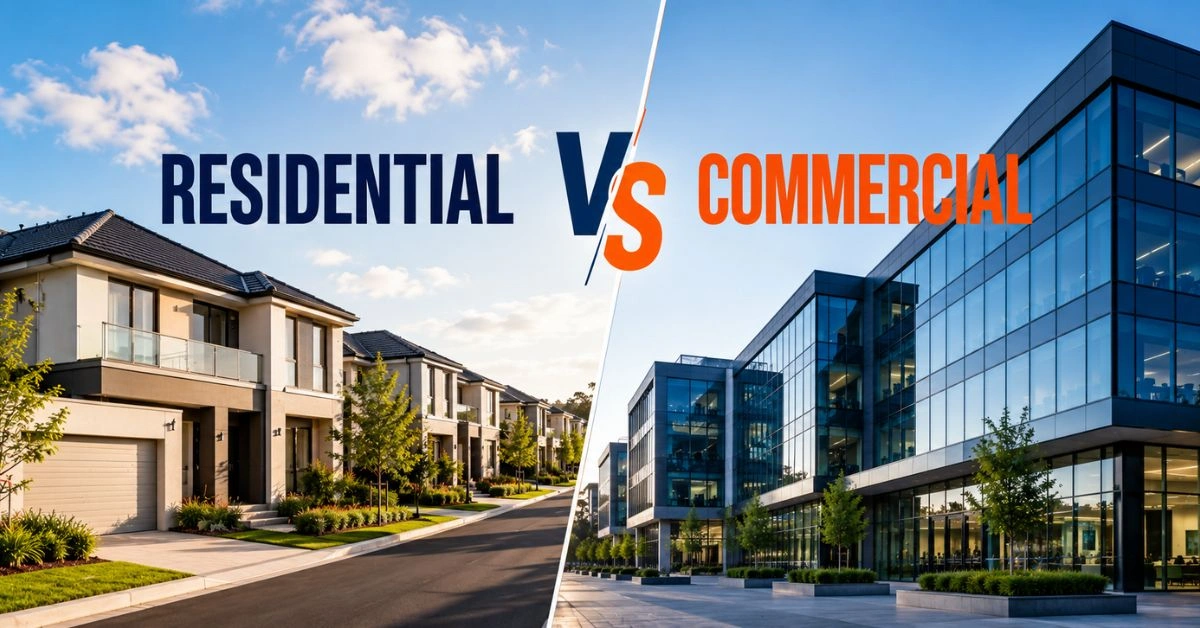
Development of property plays an important aspect of the industry, and plays a significant role in the shaping of residential and commercial regions. Developers acquire land or buildings and make improvements to improve their worth and accessibility. Within the many categories within the field such as residential property development and commercial real estate development is among the two principal kinds.
Though both are based on the planning and construction of a building, as well as investing, they are different in their goals, cost in terms of risks, rules, and the possibility of profit. Knowing these distinctions is crucial for developers, investors, and owners of property who wish to select the best sort of project according to their objectives and financial budget. This guide will explain the major distinctions between commercial and residential property development. It also helps determine which one is more suitable for your investment strategy.
What Is Residential Property Development?
Residential property development is focused on the creation of homes that are designed specifically for people to reside in. The projects aim to address the need for housing in cities, suburbs, as well as rural locations. These developments could be anything from single-family homes up to massive apartment complexes, as well as gates-controlled communities.
The principal purpose of residential developments is to create spacious and comfortable living areas to homeowners, families as well as tenants. The type of residential development is typically considered less expensive for investors with no experience because development is usually less expensive and simpler to oversee when compared with commercial projects.
Types and Main Purpose of Residential Projects
The most common residential projects comprise:
- Single-family houses
- Condos and apartments
- Townhouses
- Community homes
The main purpose behind these projects is housing. Developers concentrate on elements like the location, amenities, security as well as lifestyle requirements in order to attract renters and buyers. Residential property generally sees a consistent demand due to the fact that housing is constantly essential, making the sector fairly stable across many markets.
What Is Commercial Property Development?
Commercial property development is the process of creating buildings that are used for business purposes as well as income-generating. The development is designed to accommodate retail stores, companies and other organizations instead of the individual homeowner. Commercial projects tend to be bigger in size and demand greater investments than housing developments.
Developers in this field are focused on increasing business performance in terms of customer accessibility as well as long-term rental revenue. Commercial property development could provide huge financial benefits, but it comes with higher risk and more complicated rules.
Types and Main Purpose of Commercial Projects
Commercial development projects can comprise office buildings such as shopping malls, hotels, retail stores warehouses, as well as industrial structures. Their primary goal with these developments is to aid in the business’s operations as well as generate income via leasing or commercial operations.
Commercial developers typically work closely with architects, investors municipal authorities and companies when planning. Things like the flow of traffic, demand for market as well as economic and market conditions have a significant impact on the development of commercial buildings.
Residential vs Commercial Property Differences
The biggest difference between residential and commercial property development is the purpose of the property. Residential developments are designed for living, while commercial properties are built for business operations and profit generation. Residential projects usually require lower investment, making them more suitable for first-time investors and small developers. In contrast, commercial developments often involve higher land prices, construction costs, and long-term maintenance expenses.
There are also major differences in risk, regulations, and project timelines. Commercial properties can offer higher rental income and long-term returns, but they are more affected by economic downturns and market fluctuations. Residential properties generally maintain stable demand because housing is always needed. Commercial developments also face stricter zoning laws, environmental rules, and approval processes, while residential projects are usually simpler and faster to complete.
Which Property Development Type Is Better for Investors?
The choice between commercial and residential property development will depend on an investor’s goals for financial success, his expertise, and level of risk. Residential property development is typically favoured by novices because it’s less costly and provides a more reliable demands. Residential projects that are smaller can be more affordable to finance and run.
Commercial developments are appropriate for investors with experience who are looking to make more money and longer-term business possibilities. Commercial properties are able to generate greater rental returns and draw tenants for a long time, however they come with greater operational risk and more commitments to finance.
Investment, Risk, and Profit Comparison
Residential developments typically offer lower risks and higher stability in occupancy rates, particularly in cities that are growing and in which housing demand is strong. It could provide stable cash flow as well as longer-term growth with less administration needs.
commercial development on contrary, may yield greater profit margins as well as higher return on investment. However, periods of vacancy as well as economic fluctuations and competitive markets can have a significant impact on profits. Investors should carefully study the local market as well as the financial situation prior to launching an investment project commercially.
In the end, the most effective choice is based on the investor’s financial budget as well as their experience and investing strategy. Many developers diversify their portfolios by acquiring commercial and residential properties, to ensure a balance between risks and rewards.
Final Thoughts
Commercial and residential property development are both important parts of the real estate market, but they serve different purposes. Residential development focuses on providing housing and maintaining stable demand, while commercial development is designed to support business activities and create stronger income-generating opportunities.
Each type of development comes with its own advantages, risks, investment requirements, and market conditions. Residential projects are often a better option for beginner investors looking for lower risk, while commercial developments can offer higher returns for experienced investors with larger budgets.
Before choosing a property development strategy, investors should carefully evaluate market trends, financial goals, and long-term plans. Understanding the differences between residential and commercial property development can help investors make smarter decisions and build successful real estate projects.
Contact us to discuss your property development requirements and get expert guidance.